Red Posts
Driving to and fro along the A35 from 1982 to 1984, I asked myself the question ‘Why is that road sign painted the same colour as Hants & Dorset bus stops? Perhaps it’s both I thought, and forgot about it until I moved to Dorset forty years later.
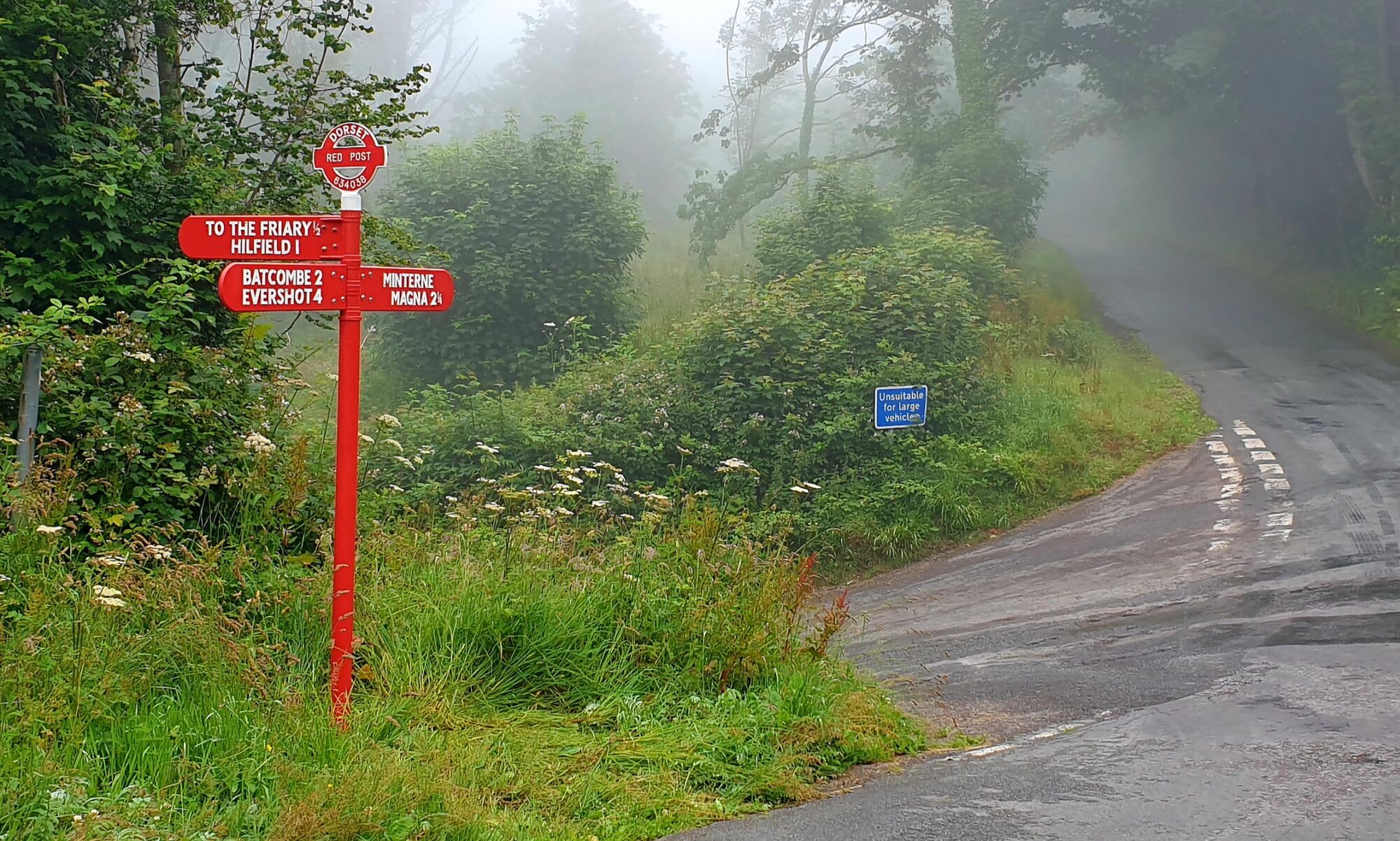
There are three genuine red finger posts in Dorset, but none at a location known by the name ‘Red Post’, but all located at road junctions. In contrast, a red finger post in Cornwall is located near Bude at what is still the Red Post Inn, and a white finger post (formerly red?) at the Red Post Inn at Peasedown St John Somerset, near Bath. I will deal with the three red finger posts in Dorset first, and mention in passing that a fourth (fake) red post is located at Hewood – this was the subject of a Facebook post by Tim Beer on 15th March 2025 – painted red as a prank in the 1970s, which the Council re-painted circa 1986, thus bestowing it with false provenance.
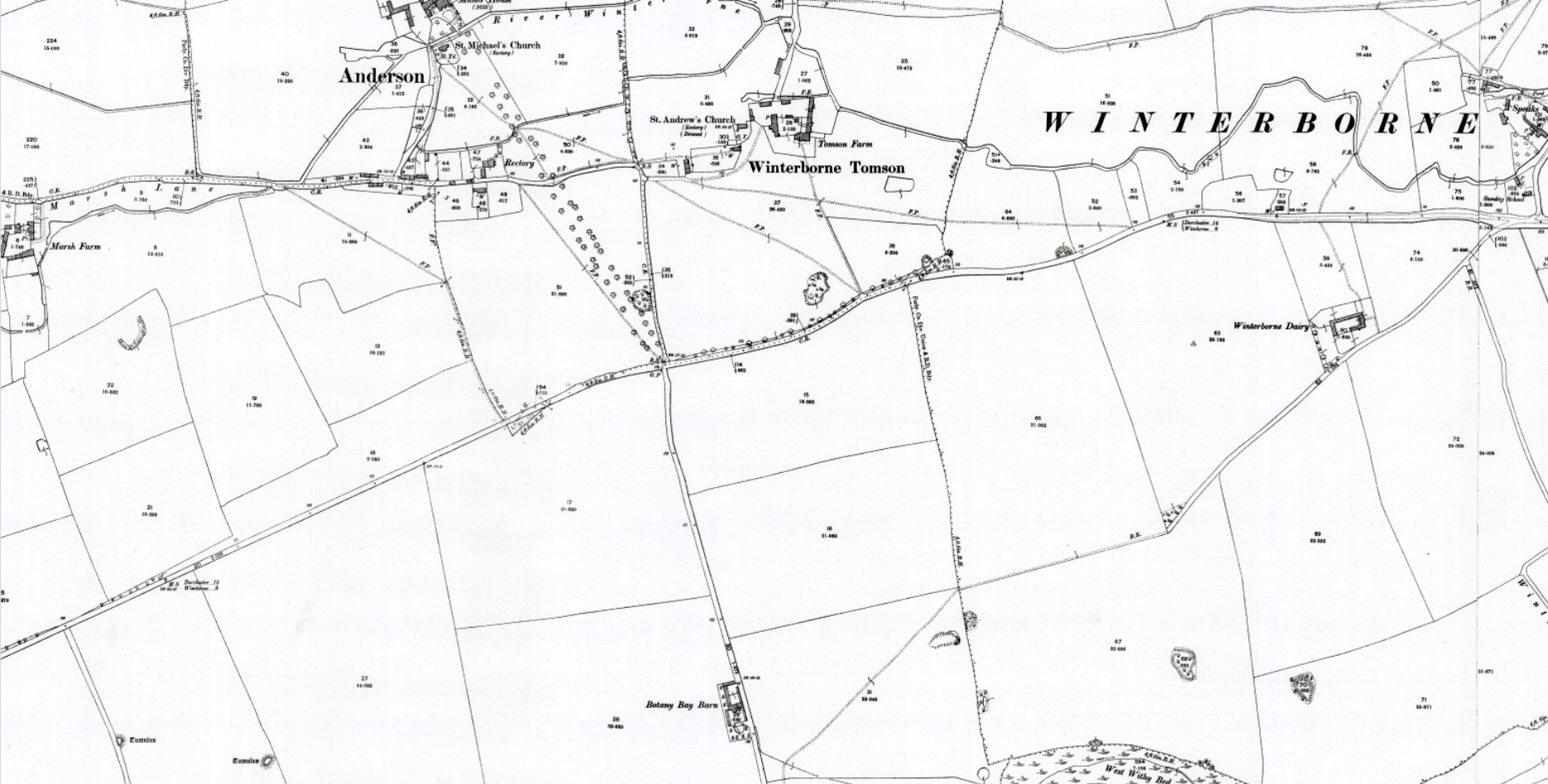
Red post 883970 on the A31 near Bloxworth excites the most controversy of the genuine three, evoking tales of Convicts bound for Botany Bay. Typical is an article headed ‘The Gruesome Past of Dorset’s A31 Red Signpost’ published in Dorset Live on 1st March 2023. The article claims that ‘The origin of the Red Post at Bloxworth was to help prison guards find the local lock-up at Botany Bay Farm about 200 years ago’. Captain Philip did indeed set sail with 11 ships for Botany Bay on 13th May 1787, but on arrival, between 18th & 20th January 1788, immediately abandoned Botany Bay for Port Jackson, the second & third transports doing likewise in 1790 & 1791. The first fleet set sail from Portsmouth, the second fleet’s departure port is unknown, and the third sailed from Dublin.
Botany Bay Farm is indeed named on an 1845 Tithe Map, but not found any earlier. Ironically, the current occupier of the farm buildings is Joseph Bugler, a New Holland agricultural machinery dealer, ‘New Holland’ being the original name for Australia.
Subsequently, single vessels set sail for various destinations, starting in 1790 with Norfolk Island, then Van Diemen’s Land (Tasmania) then Western Australia, so the significance of Botany Bay, named by Banks (Captain Cook’s Botanist) is merely an abandoned settlement plan. Dorset Live says that the stories of convict departures for Botany Bay are corroborated by The Botany Bay Inne at Winterborne Zelston, but the pub was built by Hall & Woodhouse around 1932 – originally called the General Allenby, it was renamed in 1988 to celebrate Australia’s Bicentenary Year.
We don’t need to consider whether illiterate prison guards needed orientation provided by red sign posts, since the habitual movement of convicts through Bloxworth most likely didn’t occur, besides which one wonders how they navigated their way to the red post from Dorchester jail through possibly Puddletown, Burleston, Tolpuddle, Shitterton & Bere Regis with the aid of just white sign posts.
Bloxworth Red post 883970 and the other two, all located at principal road junctions, have been believed to be marking the site of hangings. However, all hangings took place in Dorchester after Assizes; Speed’s 1611 plan of Dorchester shows that they took place at what is now the junction of Icen Way and South Walks Road, and a 1786 engraving shows the site moved to below the parapet of Maumbury Rings. Executions continued here until about 1795, when a new prison was built facing North Square, evidenced by an Execution Bill (poster) for the 1801 Lent Assizes.
Not only this, but executions appear to have been confused with the practice of gibbeting – the public display of parts of the bodies of executed felons. The practice of gibbeting ceased by 1810 with two exceptions in 1832: William Jobbing in Jarrow, and James Cook in Leicester. It is difficult to see how the locations of iron gibbet cages in Dorset were ‘remembered’ down to the erection of finger posts distinguished by red rather than white paint.
The Bloxworth red post was long used as a muster point for fox hunts – the earliest meeting notice I found in newspapers was from November 1865, and the latest March 1920.
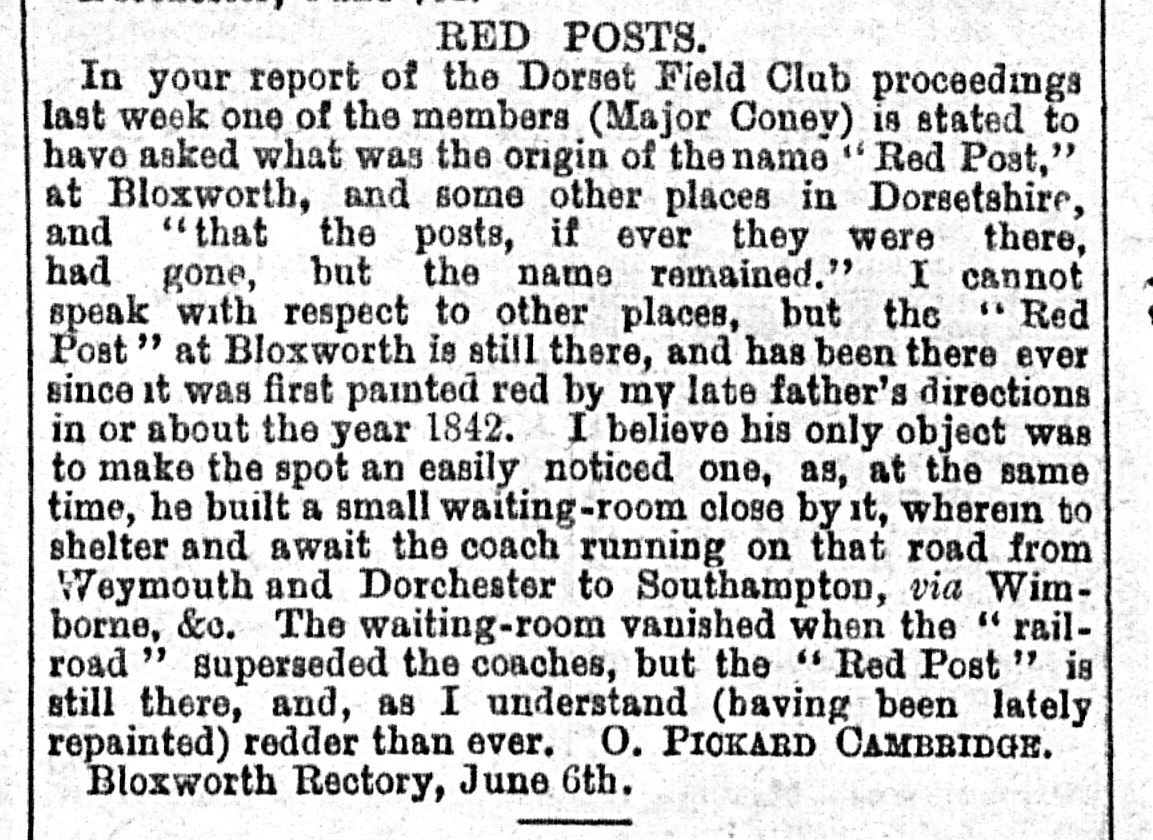
The Dorset Chronicle of 9th June 1910 strongly hints that coaching routes were marked by boarding points for passengers painted red (which also became the chosen colour for Hants & Dorset bus stops from 1920). Reverend Pickard Cambridge was prompted to write to the Chronicle when in the previous week’s edition the origin of the term ‘red post’ was discussed in the Annual Report of the Dorset Photographic Society – an unnamed member offered that “….As the names were attached to cross roads, the posts might have referred to the gallows upon which evil doers used to be hanged in the old days”. But Reverend Pickard Cambridge (1829-1917) was quick to give this explanation absolutely no credence.
Red post 640198 above Poyntington (B3145) is located at the fork of the road to Corton Denham, located in Somerset until 1896. The earliest mention in the press I can find of a red post here is as a meeting point of an August 1826 horse race, and press notices identifying this red post as a meeting place for fox hunts extend from March 1836 to November 1906 – three times more numerous than meetings at the red post at Bloxworth and at the red post at Benville Bridge near Evershot. Red post 640198, just like the Bloxworth red post, is located where minor roads from settlements meet a major road, just where inhabitants of outlying villages could board a coach bound for a large town.
Red post 553040 on Horsey Knap lies 1 ½” miles west of Evershot – its location on a principal east-west road which is met by lanes from surrounding settlements, and just like the Bloxworth red post could well have been a boarding point for coaches. Press mentions are few, and confined to notices of the meeting point for forthcoming fox hunts in the early twentieth century.
Red post 640198 located above Poyntington at the fork of the B3145 with the road to Corton Denham, it lay within Somerset until 1896. Press announcements are the most numerous for this location being used as a convenient muster point for fox hunts between 1836 and1906. The earliest press mention of red posts used as landmarks or muster points is 1826 – a 2 ½ mile horse race from Sherborne Red Post was advertised in August of that year, and again in 1838.
Press crime reports, fox hunting reports (and in one case the capture of an escaped asylum patient) often involve geographic descriptions, and inform that locations today without a red post once had one:
In Dorset:
- A crime report from 1881(involving obtaining money under false pretences) occurred on Stoke Road Beaminster near the junction with Clay Lane (B3163) where a red post was then located. This is just 6 miles from the red post on Horsey Knap.
- In 1902, the capture of a lunatic occurred at Red Post Barn Upper Sydling, which I assume is on Sydling Road from Cerne Abbas, at the crossroads between Up Sydling and Sydling St Nicholas where of course there is a finger post.
- In 1894, a fox hunting report said that a fox was chased ‘Over Red Post, Rough Hill, Batcombe Hill to Upcerne Wood…’ implying that the finger post at the junction of Haydon Lane with the A37 (Long Ash Lane) was once painted red.
- As above, but in 1929: ‘Hounds ran through Siviers* past Hell Corner, through Calfhay and back through Siviers to Red Post, where the hounds were beaten’. This is my home turf in the Wriggle Valley, and can only refer to fingerpost 605065 at Hell Corner close to Melbury Bubb. * This is Seivers Lane, an ancient partly-sunken track way located between Batcombe & Chetnole.
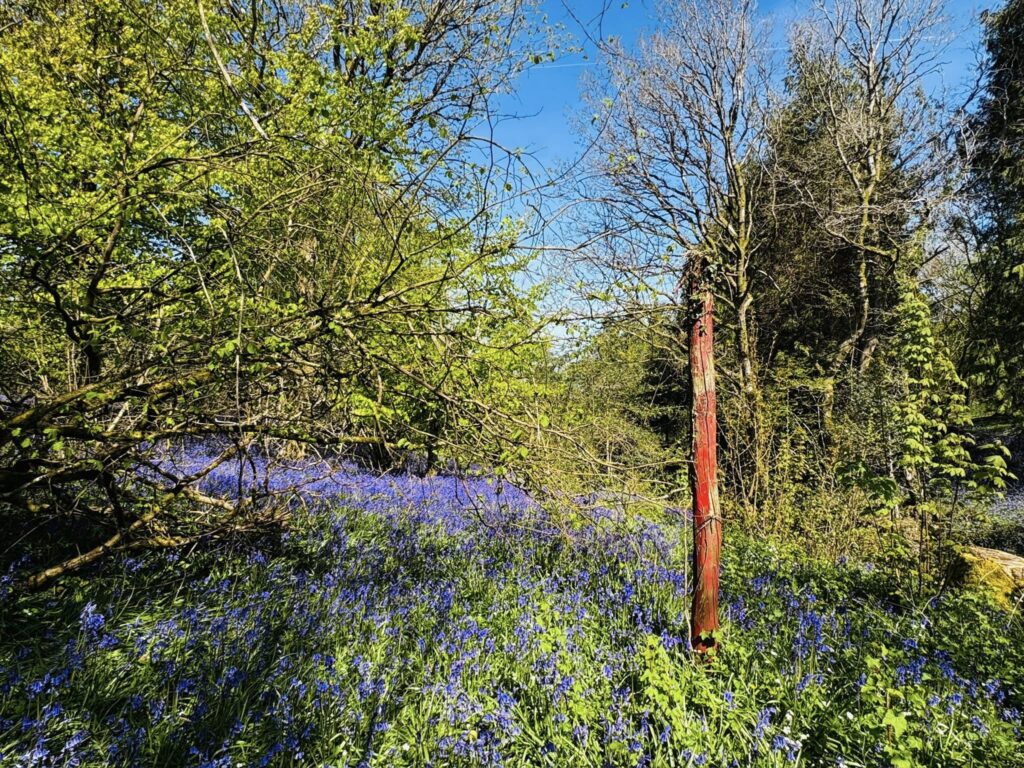
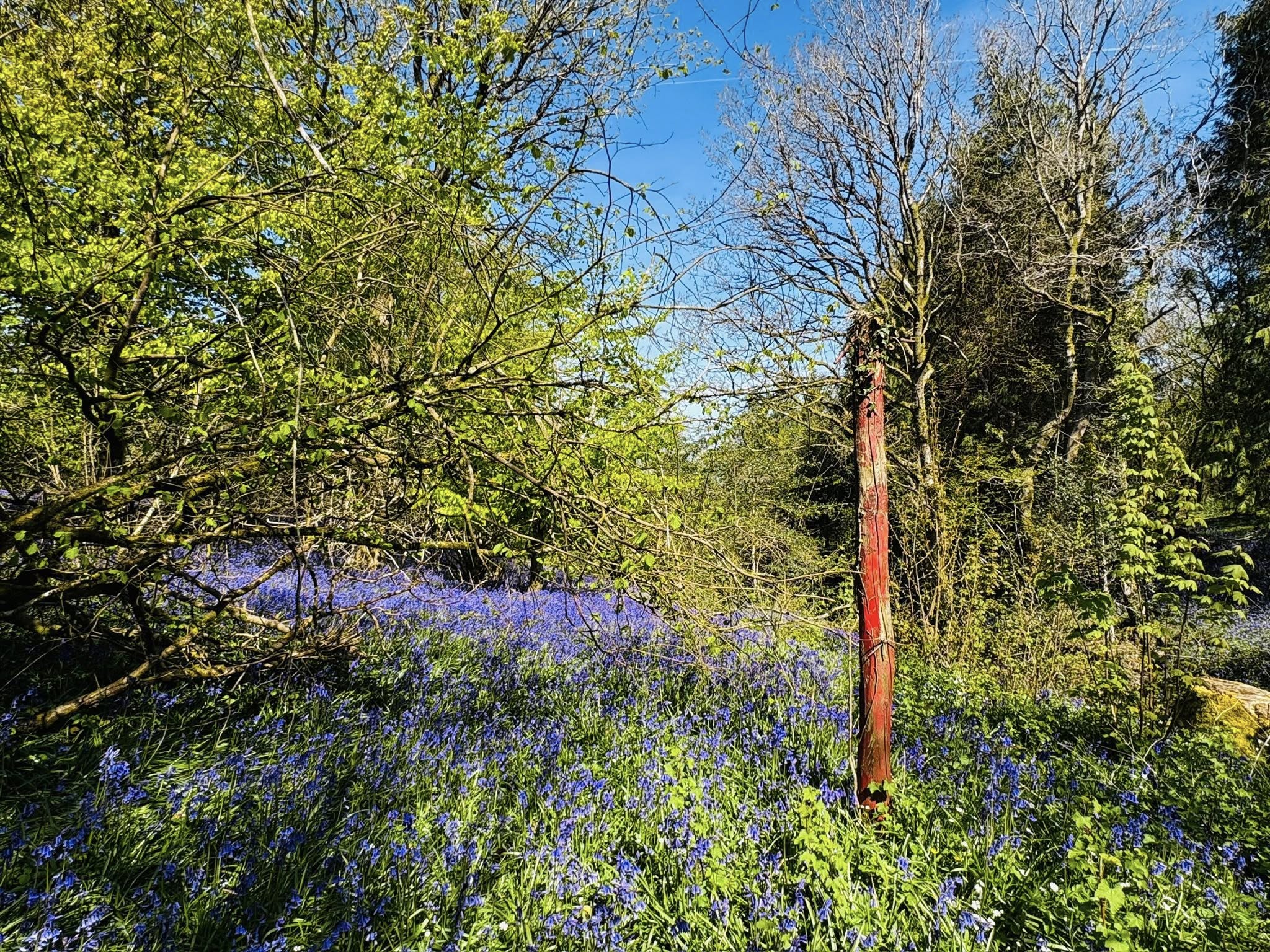
- Also, in Hilfield, where the lane from the Friary meets the Evershot road near Red post Hill, adjacent to the northern end of Wessex Ridgeway, Tim Beer has discovered during restoration work an original, sweet chestnut, red post.
In Somerset:
- In 1840, the Ilchester Turnpike Trust proposed new toll houses, one at the end of Common Lane at East which meets the old Roman road at East Charlton red post, now the A37.
- An 1829 application for a turnpike from Lyng (off the Taunton Turnpike) to the red post at Fivehead is mentioned.
- In 1913, a Member of Parliament’s wife was thrown from her horse at Red Post, Master’s Gorse Crowcombe, during a fox hunt in the Quantocks – close to the Williton to Axe Bridge road.
The above imply that some red posts were ‘forgotten’ at different times, between the end of the 19th century and the first quarter of the 20th century, and consequently unknown to ‘hanging site’ theorists.
There are no ghoulish stories I am aware of attached to the red post in Cornwall or the Red Post Inn located 6 miles south of Bath in Somerset – the former is located on the crossroads of the A3072/B3254 near Launcells Cross, where there is the Red Post Inn, and the latter at Peasedown St John on Fosse Way, again marked by an Inn of the same name. I offer both of these as further evidence of the irrelevance of capital punishment and transportation in the story of red posts, rather their appearance on late-18th century coaching routes.
Launcells Red Post
The first mention I can find in the press of a red post here is in 1818, when the Bude Canal to Oakhampton was proposed, but the location ‘Red Post’ wasn’t officially adopted until the 1861 Census – in 1851, the location had been referred to simply as The Cross. In the 1891 Census, the location was known as Red Post Inn. The Great Western Railway operated a coach service from Bude to Launceston – I found a timetable in the press dated September 1891 mentioning the Red Post Staging Point. The Inn’s licence wasn’t renewed in 1908 following the death of the Licensee, and the new occupier ran it as a temperance house. Interestingly, to circumvent the Act of Parliament that revokes the Licence, the present Licence applies to a former barn on the same site according to a 1994 article when the Inn came up for sale.
Peasedown St John Red Post Inn
A Google Earth search will show that today, the finger post is painted white, but the Inn is still trading, its current sign a pun on ‘red post’ with a picture of a Penny Red postage stamp.
The 1861 Census for Farrington Gurney (6 miles west of Peasedown St John) records a 67 year-old widow Mary Francis, who gave her place of birth as Red Post – this implies that this location was called Red Post before 1794. Certainly, it was already called Red Post by 1824, when a toll house was built here. The 1841 Census records the Red Post Inn, but the present building dates from 1851. Adjacent to the Inn is a white Bath Turnpike boundary marker, hinting at a staging point for coaches to and from Bath.
Conclusion
I will finish with a second mention of the myth-busting Reverend Octavius Pickard Cambridge (1829-1917) – he was a man from an age when fear was widely used as a means of dissuading others from wrongdoing. It’s possible that stories and beliefs linking hangings and transportation to red finger posts were told to the young to frighten them into law-abiding behaviour, fear mongering which the Reverend Cambridge may well have had little time for. It certainly troubles me that some people today see history composed of stories and beliefs, and not as a process of testing a theory with demonstrable facts.
Stephen Booth
21st June 2026.